1. Recognise that we can be our own greatest risk
Markets are unpredictable, but our reactions to them can be more damaging still. Recognising that fear, euphoria and loss aversion influence decisions is the first step towards reducing their impact.
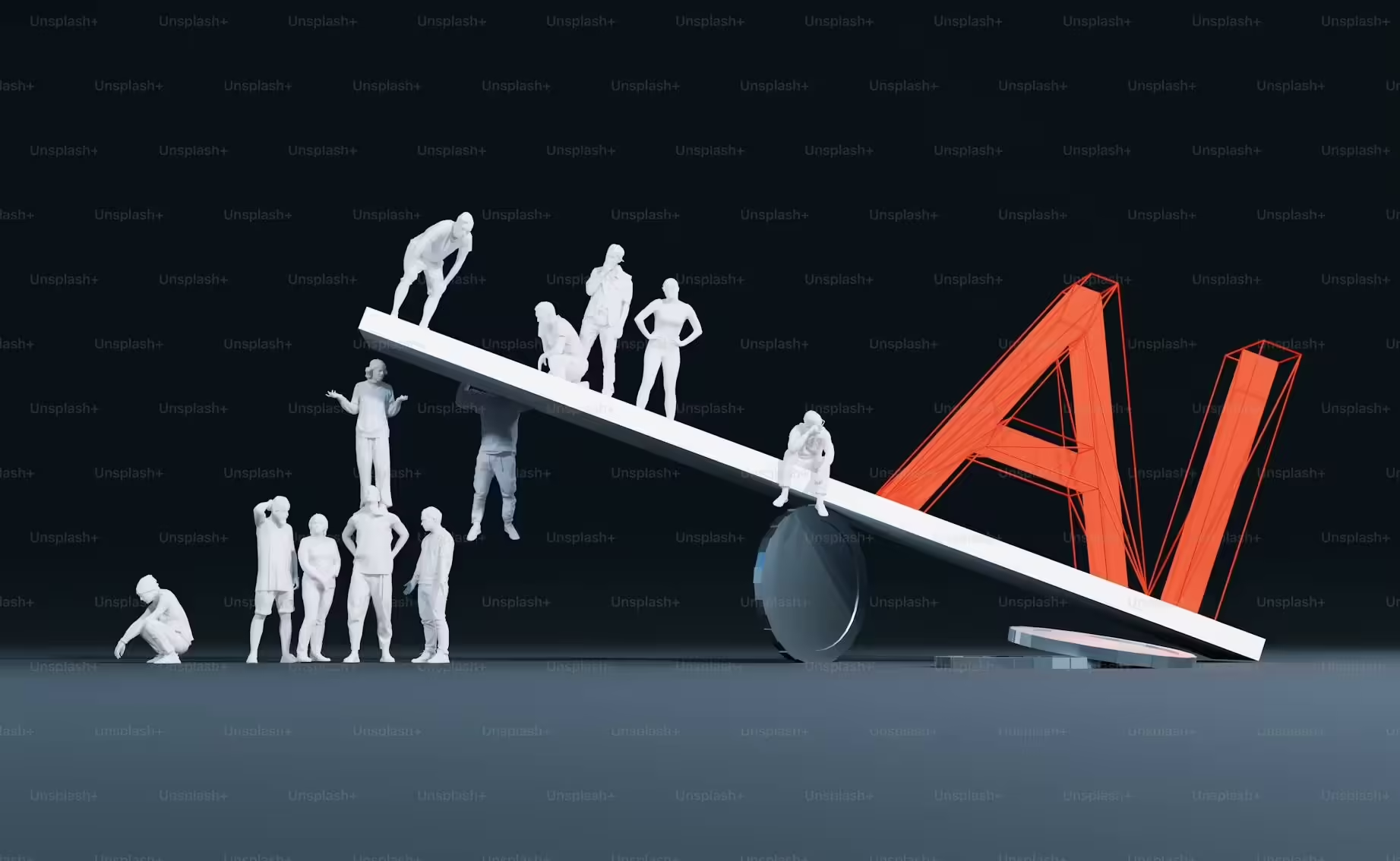
AIWA Asesores combines artificial intelligence with human judgement to filter noise, detect bias and support better-informed decisions in context.
Administrador
One of the greatest risks in any investment decision lies not in the market, but in ourselves. Cognitive biases, inherited narratives and poorly managed emotions influence us more than we realise — often without being noticed.
At AIWA Asesores, we use artificial intelligence not to replace human judgement, but to refine it. We use it as a tool for challenge: to filter noise, identify distortions, question assumptions and reinforce decisions that are genuinely well founded.
We do not delegate judgement to an algorithm, but we do support it with data, context and structure. Independent thinking means more than avoiding conflicts of interest; it also means learning to see more clearly and decide with less interference.
Markets are unpredictable, but our reactions to them can be more damaging still. Recognising that fear, euphoria and loss aversion influence decisions is the first step towards reducing their impact.
Overconfidence, anchoring to initial information and confirmation bias are mental traps that distort perceptions of risk and opportunity.
Key AIWA principle:
At AIWA Asesores, AI does not dictate the final decision. Its role is to organise and challenge information, identify patterns and reduce noise so that human judgement begins from a clearer, more objective base.
Statements such as ‘equities always rise’ or ‘property never loses value’ can be dangerous when they are not tested against the data and current context.
Example: The 2008 property crash showed that even assets perceived as ‘safe’ can fall sharply.
Decision-making is not improvisation. A clear process — analysis, challenge, risk assessment and execution — reduces reliance on intuition and increases consistency in each action.
Key AIWA principle:
Not everything that reaches us is useful for investing. Filtering what matters helps prevent overload and hasty decisions.
Sometimes the best action is to take none. A strategic pause can provide a clearer view of trends and risks, particularly during periods of high volatility.
Example: Introducing a pause before responding to a market event can help prevent impulsive decisions.
AI provides data, markets provide context and experience provides judgement. Combining all three helps support decisions with less interference and a stronger foundation.
Too much information can prevent action. Setting limits on the time and data to be considered helps prevent inaction and stress.
Key AIWA principle:
Reducing noise is not a one-off exercise; it is an ongoing practice. Reviewing the strategy regularly and developing objectivity improves the quality of long-term decisions.
AIWA tip: A disciplined process matters more than a moment of inspiration.
The usefulness of an artificial intelligence tool depends on how clearly the problem is defined. Asking it to find the best investment conflates objectives, risk, time horizon and preferences that technology cannot decide on someone’s behalf.
Before beginning the analysis, define:
This preparation helps prevent an apparently precise answer to an overly ambiguous question.
The speed of the tool does not remove the need to understand how its answer was produced. Before incorporating an output into a decision-making process, apply four checks.
A well-structured output cannot, by itself, correct an incomplete, outdated or biased source. You need to know where the data came from, which period they cover, how often they are updated and whether they represent the issue being analysed appropriately.
When the context changes or new information becomes available, the output must be reviewed. A formally coherent answer does not guarantee that its underlying basis remains valid.
A useful output must be capable of being expressed in understandable language. Identify which variables influenced it, how they relate to one another and which limitations apply to the method.
If you cannot explain why a conclusion might be reasonable, you do not yet have a sufficient basis for turning it into a decision. An explanation also helps reveal errors, contradictions or excessive dependence on a single data point.
Artificial intelligence should not be used solely to confirm an existing view. It is more useful when asked to examine contrary assumptions, identify missing information and compare different scenarios.
For each conclusion, ask:
A tool can support analysis, but it does not independently know every personal circumstance or bear the consequences of a decision. The objective, liquidity need, time horizon and capacity to bear losses require human assessment and context.
The final decision must remain understandable, justifiable and consistent with the person for whom it is made.
A convincing answer is not necessarily a correct answer. Before using it, check its data, limitations and fit with the actual objective.
Artificial intelligence can help structure work when used within a defined process.
It can help to:
It should not be asked to determine:
This boundary does not diminish the value of technology. It allows AI to provide structure where it is useful without confusing computational capability with financial judgement.
A clear workflow can be organised into the following steps:
This method allows the assessment to be repeated when data change and helps distinguish a genuine development from a difference caused by the source, model or its configuration. It also makes it easier to review later why a decision was made, without relying solely on memory or an isolated response.
Before entering personal or financial information into a tool, define which data are genuinely necessary, who may access them and how long they should be retained. Adding more information does not, by itself, guarantee a better analysis.
You should also be able to reconstruct the process: which version of the data was used, which assumptions were entered, which output was obtained and who validated it. Traceability makes it possible to review a conclusion without relying on memory or an isolated screenshot.
If a tool, source or model changes, the previous analysis should not automatically be treated as valid. Checking versions and preserving context helps determine whether a difference arises from the market, the data or the system itself.
The useful measure is not how many answers it generates, but whether it improves the process without making it harder to understand. To assess this, ask:
When the answers are clear, technology supports judgement. When they are not, adding more data or automation may increase complexity without genuinely improving the decision.
Markets will always bring volatility, headlines and conflicting data. What makes the difference is how we filter that information and prevent our own emotions from distorting the strategy. At AIWA Asesores, we combine human judgement with artificial intelligence to support clearer, more coherent financial decisions with less noise.
Contact AIWA Asesores to learn how we combine technology and human judgement in our advisory process.